


There was a long-held belief that Frank Herbert’s Dune was simply unfilmable. After all, it’s a sweeping space fantasy packed with deep lore and razor-sharp political allegories about how power corrupts even the most well-intentioned. And for a time, it felt impossible to translate the novel’s dense mythology into a big-screen blockbuster, despite numerous attempts.
With its sprawling cast of characters, layered histories, and interwoven storylines, the sci-fi saga spent decades wearing the “unfilmable” label like a badge of honor. After the critically panned 1984 adaptation from filmmaker David Lynch (hated by many, yet loved by a few; count us among those who admired Lynch’s euro-trash Heavy Metal magazine aesthetic), it seemed fans had given up on the idea of ever seeing a live-action version that truly captured the scale, depth, and mystique of Herbert’s world.
And maybe that was all for the best. Not every classic sci-fi novel needed the Hollywood treatment, right?
But then something shifted a few years ago. Movie culture changed, and Hollywood started looking for its next big cinematic epic to turn into a possible franchise. And all of a sudden, the prospect of a Dune movie was back on the table.
The question was: would they be able to pull it off and do Herbert’s vision justice? Was there anyone out there who could essentially crack the code; someone who could work within the studio system, yet still deliver something bold, captivating, and true to the spirit of the book?
Well, enter acclaimed French-Canadian filmmaker Denis Villeneuve!
Coming off two major sci-fi films—the 2016 hit alien contact drama Arrival and the 2017 critically acclaimed long-awaited sequel Blade Runner 2049—Villeneuve had already shown he was a gifted filmmaker who understood the genre with a level of maturity and sophistication, without sacrificing the visuals. He is both a master of visual storytelling and someone who already understood what author Frank Herbert was trying to convey with his books, having long been a devoted fan. His lifelong dream was to make a Dune movie as faithful to the source material as possible. Little did he know he wouldn’t just make one, but eventually three Dune films.
Released in October 2021, Dune: Part One was among the many films pushed back by the COVID-19 pandemic, eventually debuting simultaneously in theaters and on HBO Max as Warner Bros. adjusted to a changing release model. It was a move Villeneuve publicly and strongly opposed. The hybrid rollout also made it difficult to fully gauge the film’s success, as the numbers were split between box office revenue and streaming viewership. Sure, it ranked among the year’s top-grossing films, but that came during a historically low year for obvious reasons… the pandemic. Even so, fans were left wondering if they would ever get to see the conclusion of this two-parter.
But fear not. The first film made money. And it had another major advantage: a stacked, star-studded cast that included a lineup of young Hollywood breakouts—most notably Timothée Chalamet and Zendaya, who were already making waves but have since become full-fledged global superstars. Beyond the star wattage, the film was also a bona fide critical hit, ultimately winning six Academy Awards, including Best Visual Effects and one for Hans Zimmer’s now-iconic score.
Dune: Part Two arrived in March 2024, this time carrying a tremendous amount of buzz and anticipation, as the first film had only grown in popularity since its release. With Austin Butler and Florence Pugh added to the cast, the sequel became a showcase for an even deeper bench of talent. And somehow or another, the Dune franchise had suddenly evolved into a full-blown cultural phenomenon like never before. The films were no longer just IP tentpoles but were being viewed as some of the best sci-fi films ever made, featuring some of the most stunning visuals in modern cinema. And like its predecessor, Part Two also proved to be both a box office hit and an awards contender.
Looking back at the two films, it’s worth crediting author Frank Herbert for building such a rich universe with themes that have remained relevant to issues we are still grappling with today: unbridled constitutional power, religious political manipulation, and imperial expansionism.
When Chalamet’s Paul Atreides struggles with accepting his destiny, knowing full well what it could cost to launch an all-out war, it shows how manufactured myths can shape belief... and how easily they can justify violence. Paul is a manufactured messiah, perceived by the Fremen as their long-lost savior, raising the question of how much faith and belief are enmeshed with a mass movement. To lead a people, you may first have to become the story they need to believe in.
There has been ongoing debate over whether Chalamet’s Paul Atreides is truly a hero in these films. Funnily enough, it mirrors the same conversations readers had after finishing Herbert’s original 1965 novel. It seems some have missed the point Herbert was making: no matter how charismatic or well-intentioned someone may be, once a leader gains power, they are ultimately capable of great harm and destruction. As they say, power corrupts absolutely; even those who believe they’re acting for the greater good.
There’s a vintage 1982 clip of Herbert speaking about his best-selling Dune novel series to then–Today Show anchor Bryant Gumbel, where he touches on the book’s underlying message. In it, he says something incredibly revealing about his views on government and governance:
“Don’t trust leaders to always be right,”
Herbert told Gumbel.He also added,
“I worked to create a leader in this book (meaning Paul Atreides) who would be really an attractive, charismatic person, for all the good reasons, not for any bad reasons. Then, power comes to him. He makes decisions. Some of his decisions were made for millions upon millions of people that don’t work out too well.”
The idea here is clear: even the most admirable leaders—even those we fully trust, believe in, and willingly follow—can make decisions that carry devastating consequences once they hold power. Decisions that may be justified, such as going to war for a greater cause. But it’s much easier to start a war than it is to stop one, and once that war machine gets going, so-called good intentions quickly become muddled, giving way to something far more dangerous and uncontrollable. And if one ruler is replaced by another, it doesn’t matter how well-intentioned they may have started—they eventually become part of the same machinery of power and corruption. Meet the new boss, same as the old boss!
Herbert wrote 1969’s Dune Messiah, the second installment in his book series, with the goal of turning Paul’s so-called hero’s journey into a darker deconstruction of power and its consequences. His intention was to push back on any reader who viewed him as a traditional hero or someone to root for. As Herbert states in his interview with Gumbel, he wished more people had a greater mistrust of government, even joking that Richard Nixon was one of his favorite presidents because he taught Americans how to mistrust their government again. It’s an extremely cynical view, for sure. But one we completely understand, as endless wars, ethnic cleansing, the exploitation of other countries’ resources, and the allure of messianic leaders have sadly never gone out of style since Herbert first wrote his novels nearly 60 years ago.
Dune Messiah serves as the source material for the final chapter of Villeneuve’s Dune trilogy, seemingly pointing toward Paul Atreides’ downfall as a ruler ultimately overtaken by the very power he wields. He has his empire, but at a price he’s paid dearly for, possibly losing everything he once believed in.
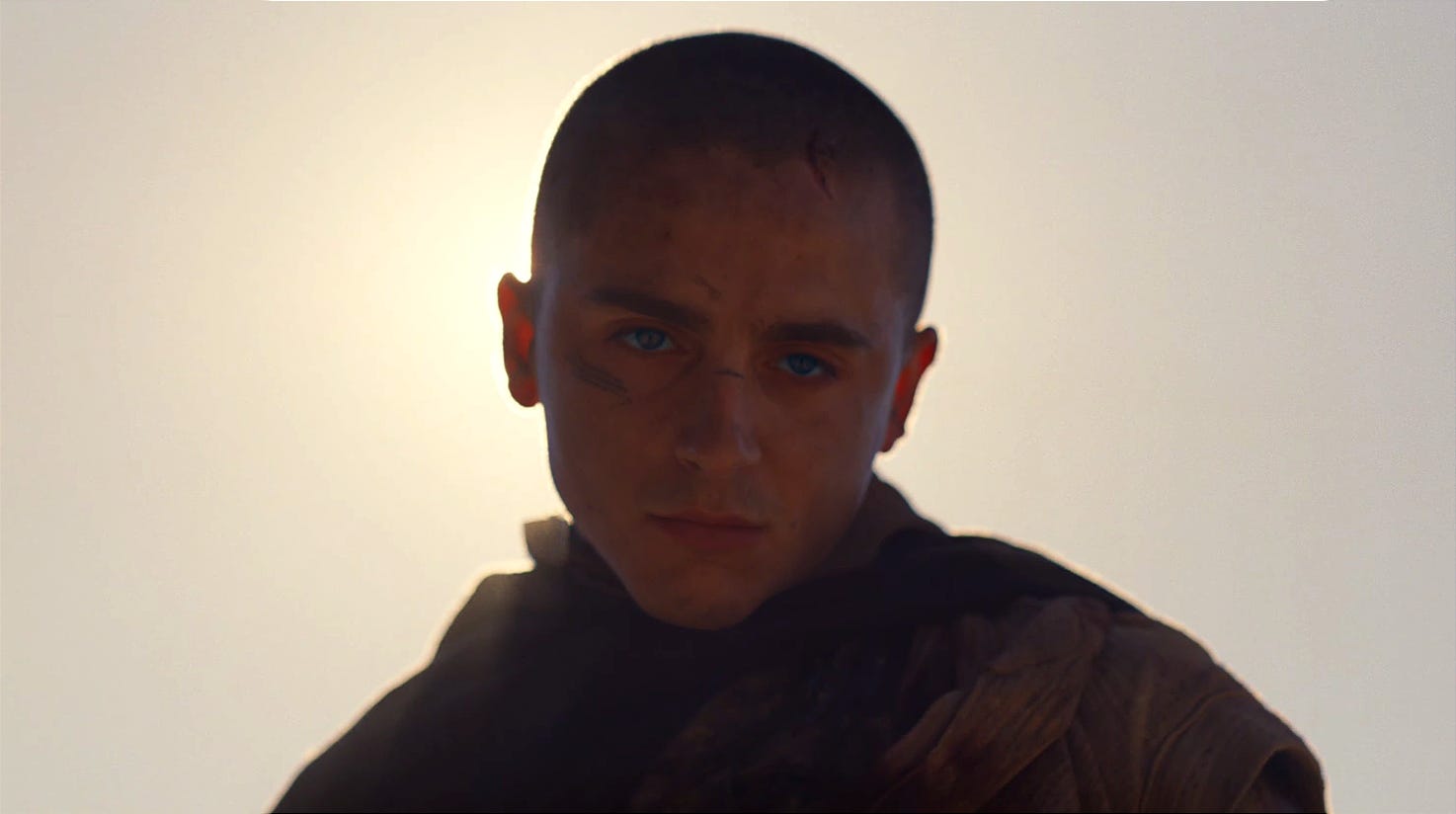
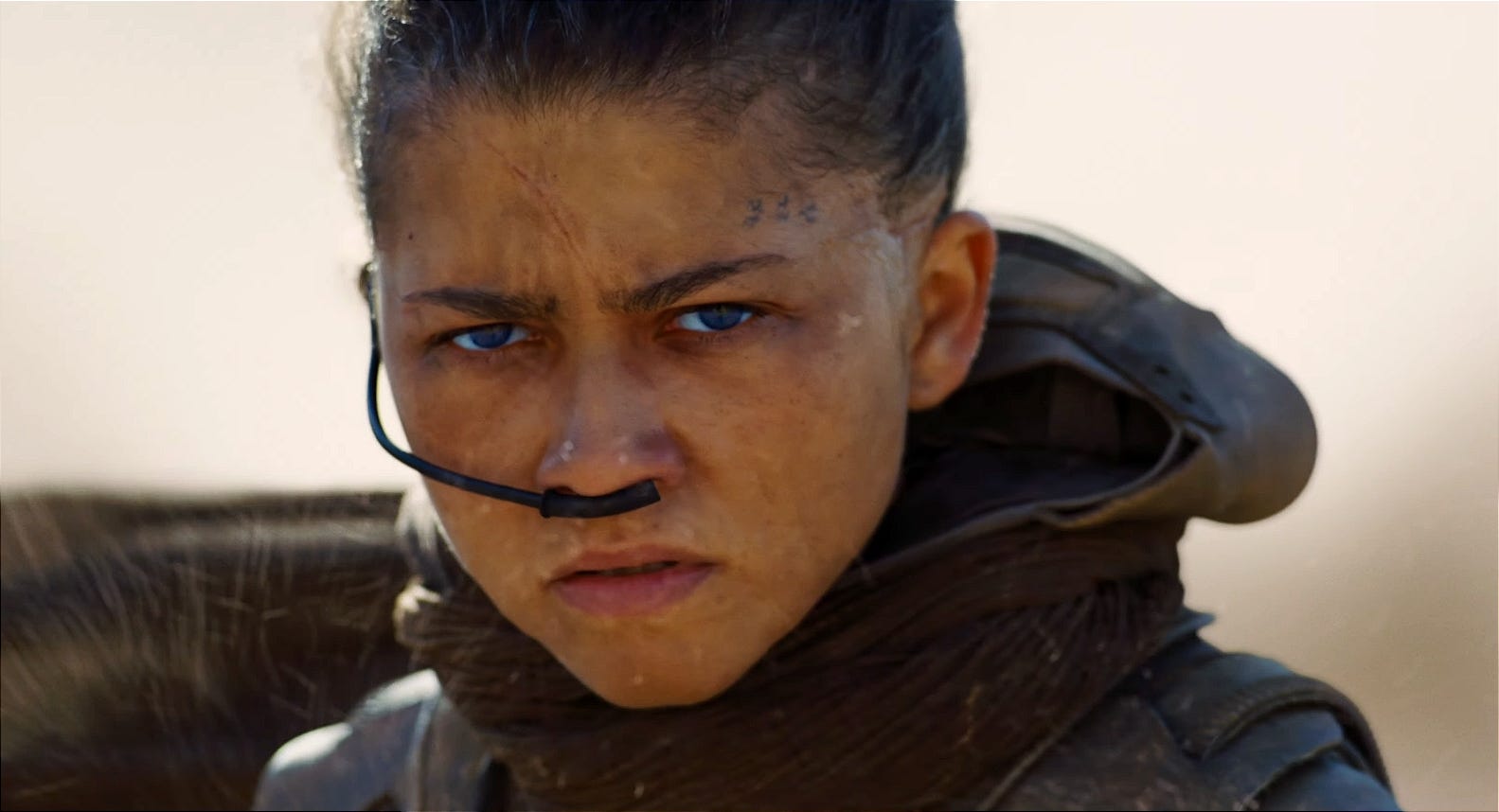
The first Dune 3 teaser trailer offers a glimpse of a head-shaven Timothée Chalamet reprising his role, while Zendaya returns as Chani, the strong-willed Fremen warrior who becomes the woman Paul loves but also the one he cannot rule... and perhaps the last person willing to challenge everything he stands for.
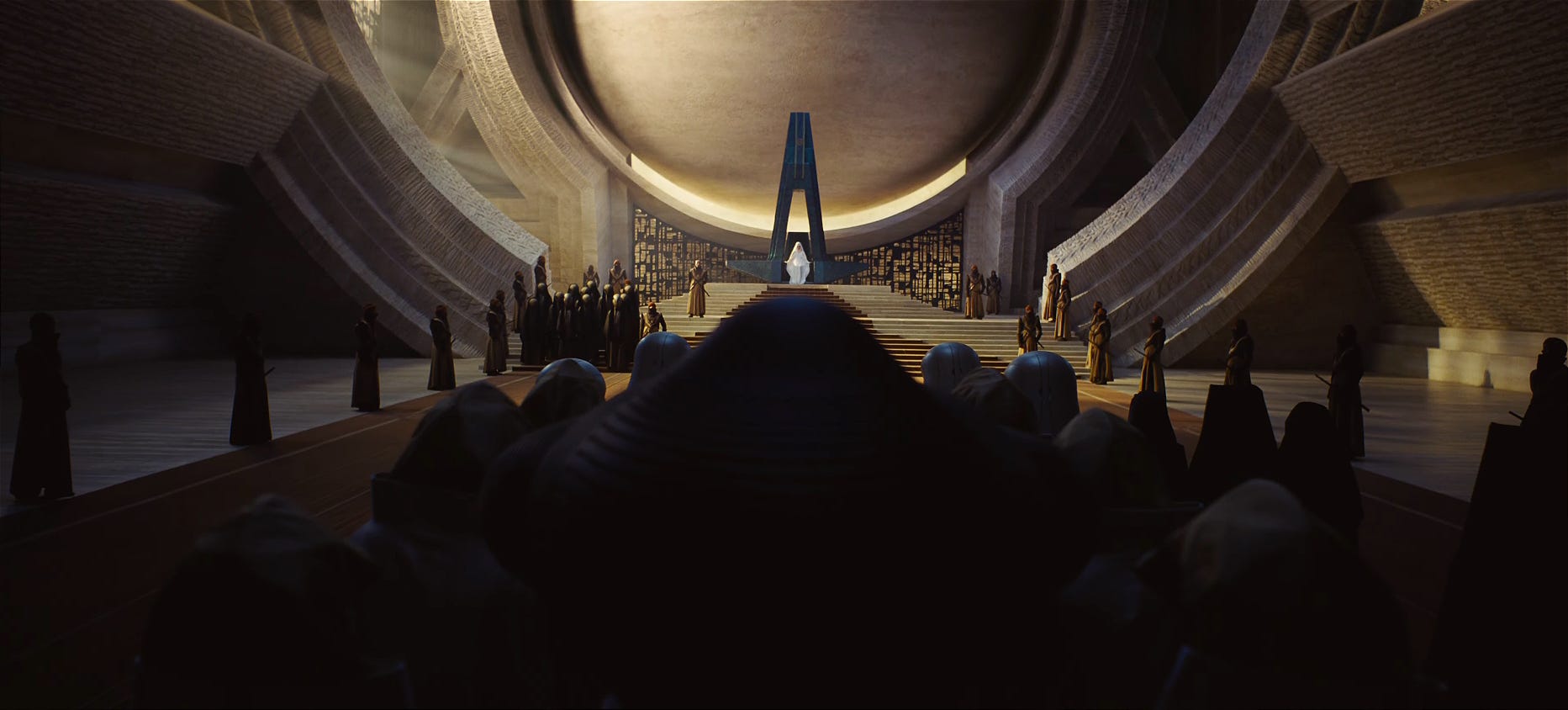
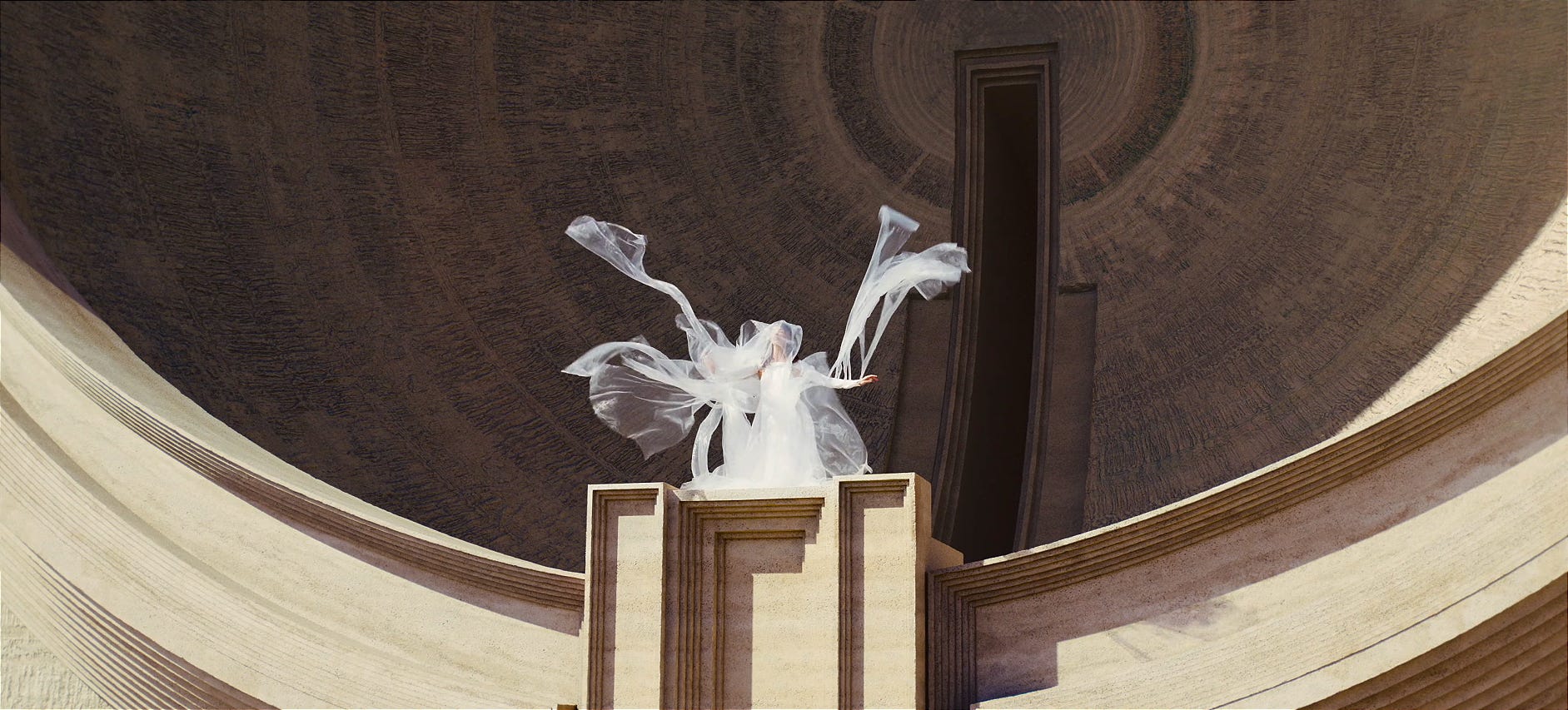
Also returning for Part Three:
Rebecca Ferguson reprises her role as Lady Jessica, Paul’s mother, a Reverend Mother, and one of his closest advisors.
Florence Pugh also returns as Princess Irulan, Paul’s wife in a calculated political marriage meant to bridge rival powers.
Jason Momoa makes a surprise return as Duncan Idaho, the fallen swordmaster of House Atreides, brought back as Hayt, a “ghola,” clone-like being.
Anya Taylor-Joy, who was teased in the final moments of Part Two, returns as Paul’s younger sister, Alia Atreides, a spiritually powerful figure who embodies destiny while also challenging it.
Other returning cast members include Javier Bardem as Fremen leader Stilgar, Charlotte Rampling as Reverend Mother Mohiam, and Josh Brolin as Gurney Halleck, former weapons master of House Atreides.
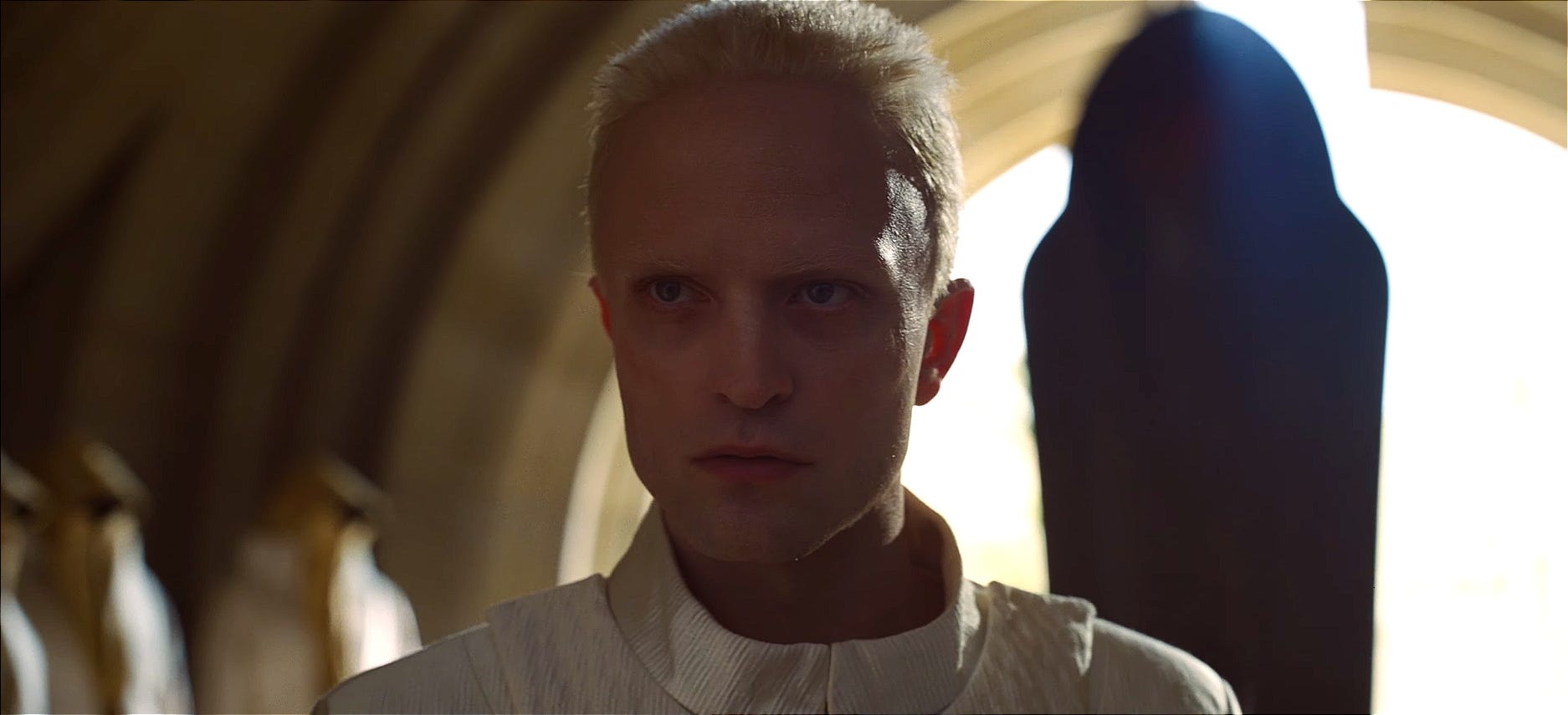
Robert Pattinson is one of the biggest new additions to this third installment, playing Scytale, a Tleilaxu Face Dancer (a shape-shifter) who becomes a pivotal figure in challenging Paul’s rule.
Meanwhile, French Ivorian actor Isaach de Bankolé joins the ensemble as Farok, a former Fremen commando who becomes one of Paul’s fiercest warriors and guards, yet grows increasingly disillusioned with his regime.
Award-winning comic book writer Brian K. Vaughan (Y: The Last Man, Ex Machina) contributed to shaping the adapted screenplay alongside Villeneuve, while acclaimed cinematographer Linus Sandgren (Wuthering Heights, La La Land) has taken over camera duties from Oscar-winning DP Greig Fraser, who shot the previous two films.
Oscar-winning composer Hans Zimmer returns to deliver the film’s signature chants and sonic textures. Because no Dune is complete without its thunderous, otherworldly score that feels both ancient and futuristic.
Dune: Part Three is expected to open nationwide in theaters on December 18th. As of now, it shares the same release date as Marvel’s Avengers: Doomsday, with no signs of either studio moving or changing their release plans.
So expect massive crowds at the cinemas that weekend… something we’d love to see more of, if only it could happen more often.


